San Marcos Elite Concrete is a concrete-contractor in Cedar Creek, Texas, with more than twenty years of flatwork placed along the Interstate 35 corridor between Austin and San Antonio. That corridor is two building markets and four counties, and the rules genuinely reverse from one jurisdiction to the next.
So we price the ground before we price the concrete. A bid written from a photograph gets revised the moment the excavator opens the first trench, and a revised bid is how a small job turns into an argument.
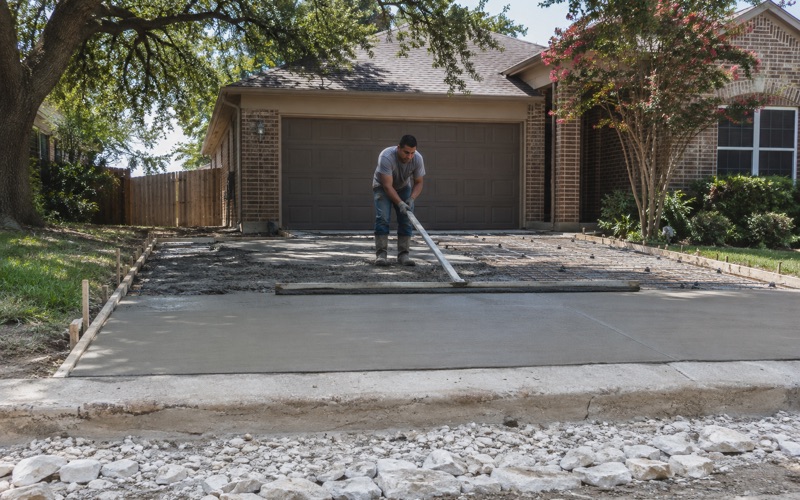
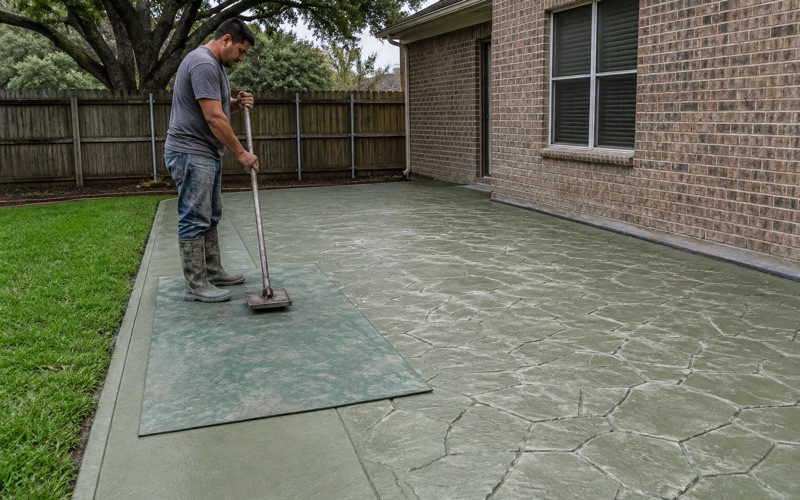
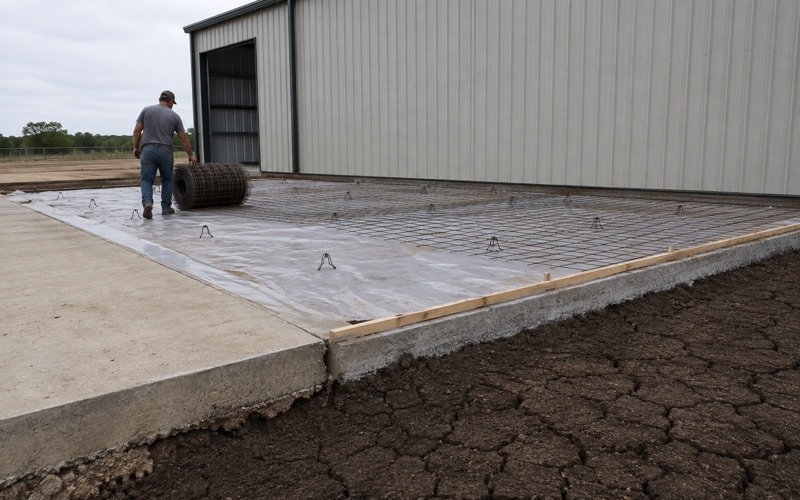
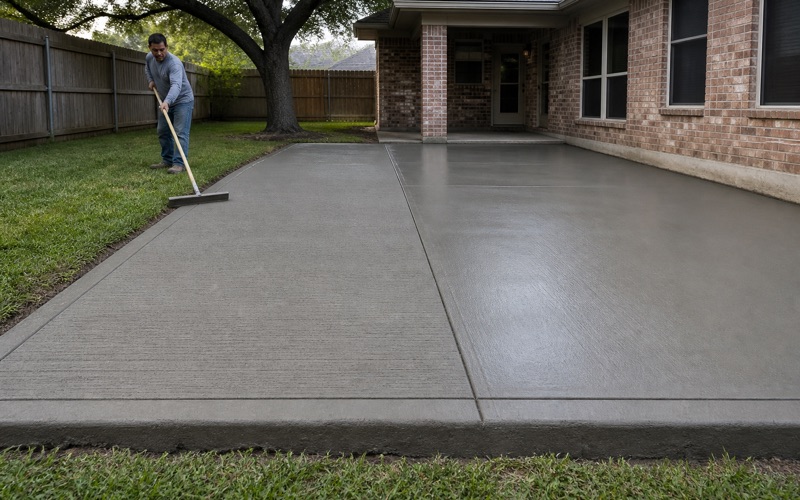
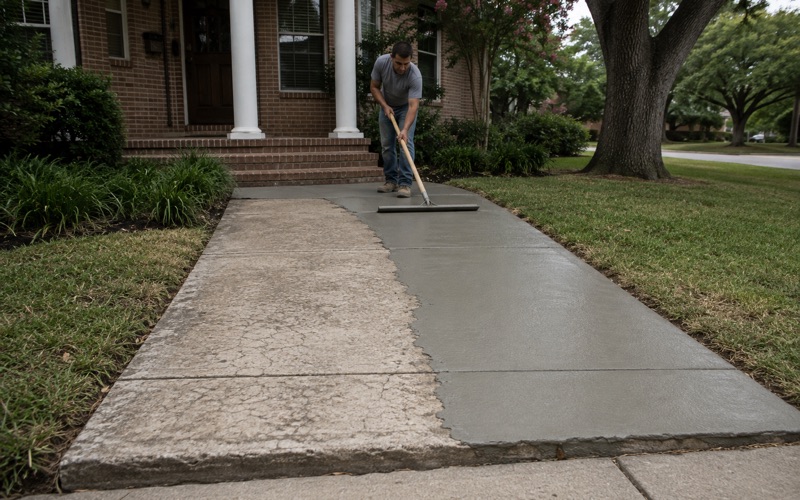
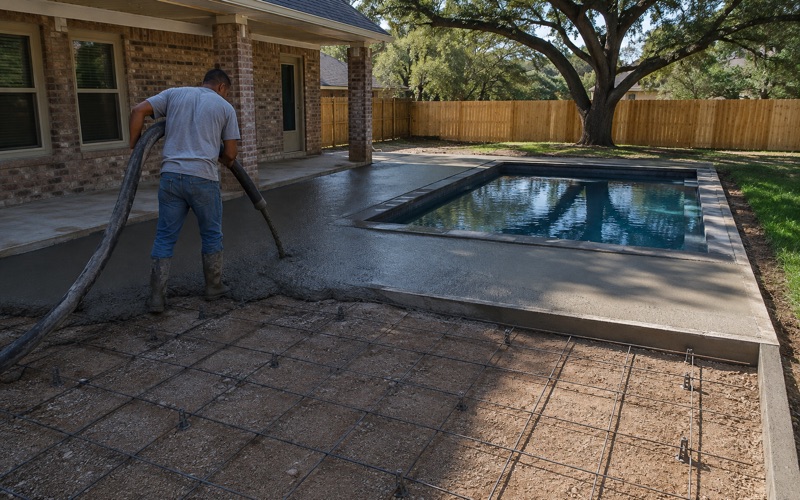
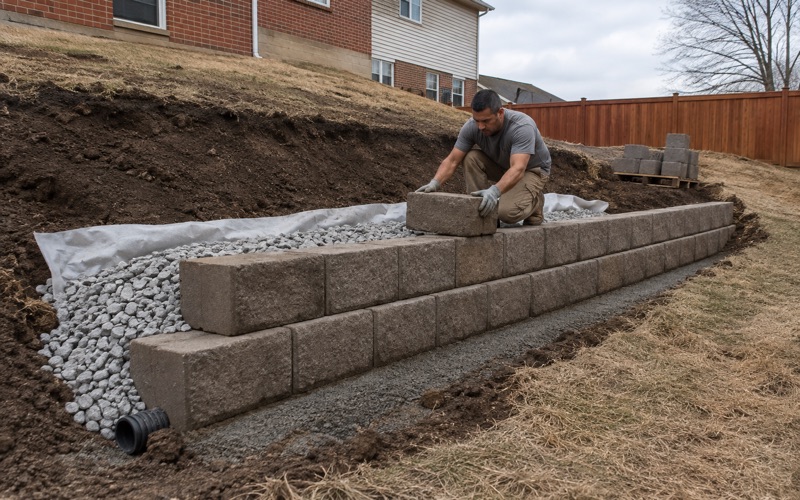
The work here is residential flatwork in the plain sense: pads, drives, runner strips, aprons, steps, landings and the replacement of slabs that have already moved. Every load arrives with a delivery ticket we hand to you, and every pour is photographed at subgrade, base, vapor retarder and steel.
Owner-Occupied Manufactured Housing, and Who Buys This Work
The Mobile Home Is the House Here
Cedar Creek is a place where the manufactured home is not the exception. Of the 1,010 housing units recorded inside the census designated place, 614 are mobile homes and 396 are single-family detached, with no duplexes or apartment buildings recorded at all.
The tenure split matters more to us than the structure count. Some 528 of those mobile homes are owner occupied, which is 52.3% of every housing unit here, and 91.5% of occupied units across all structure types are owner occupied.
Owner Occupied Changes Every Conversation on Site
When the owner lives in the home, the person choosing the finish is the person who parks on it every evening. That shortens the decision chain and raises the standard, because nobody is signing off on work they will never see again.
It also means money is real and phasing is normal. A runner strip this spring and a carport pad in the fall is a sensible sequence, and we will say which order buys the most use. What we will not do is thin a slab to hit a number.
Newer Homes on Ground Nobody Prepared for Them
The housing stock is young. The median year built across those 1,010 units is 2002, with 469 built in the 2000s, 261 in the 1990s and 153 in the 2010s; only 29 predate 1980.
Two manufactured-home retailers carry Cedar Creek addresses, and the platted rural-lot subdivisions nearby are the classic siting for what they sell. A home delivered onto a wooded acre arrives complete, and the flatwork under and around it is the part nobody ordered from the factory.
Looking for concrete-contractor closer to Bee Cave? See Bee Cave Concrete-Contractor.
Runner Strips, Carport Pads, Steps and Landings
A Runner Strip Carries a Point Load
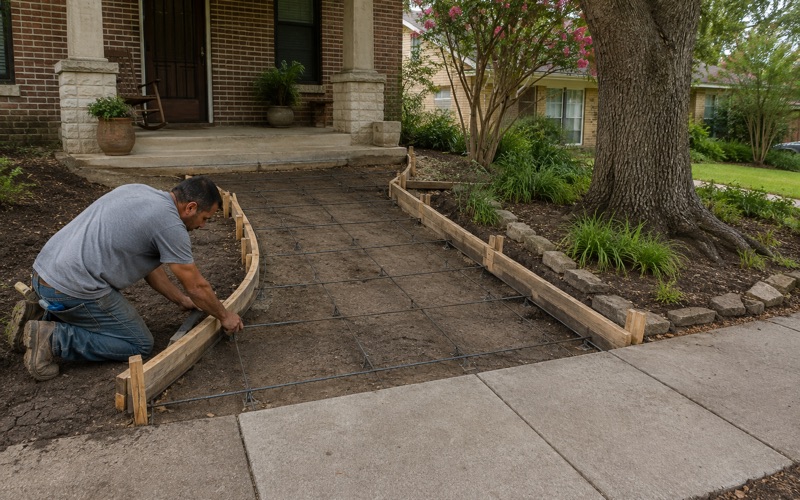
A runner strip under a manufactured home does a different job from a patio slab. The load does not spread across the surface; it arrives at a handful of pier points. Width, thickness and bearing get set from the pier layout rather than from a standard detail.
We size the strips to the frame and set number four rebar at mid-depth on chairs. The delivery ticket with each load carries the machine stamped batch time and date, the weights of cement, fly ash, sand and aggregates, and the admixture names and quantities; an incomplete ticket is grounds to reject the load.
Carport Pads and a Joint Schedule That Is Cut, Not Guessed
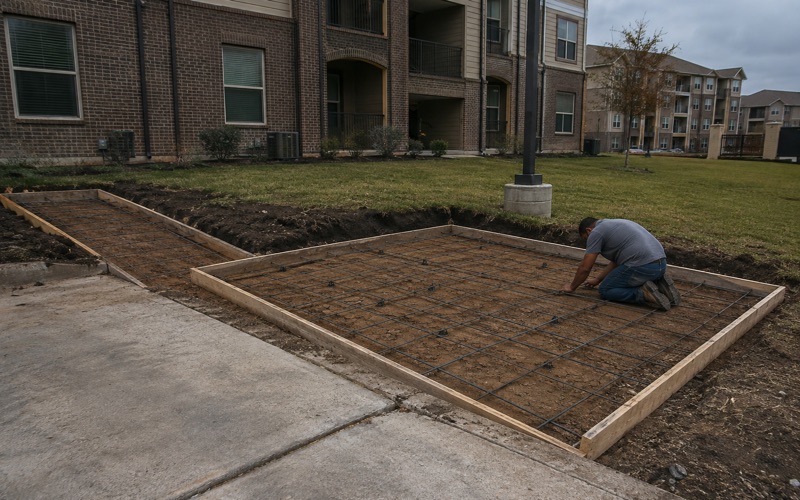
Control joints get cut to the published schedule: twenty four to thirty six times the slab thickness, capped at fifteen feet, with panels kept inside a one and a half to one aspect ratio. Long, narrow panels crack across the middle, which is why the aspect ratio is in the rule at all.
Where a pad meets an existing slab, a step or a pier, we put in an isolation joint so the two can move independently. Timing on the sawcut matters as much as the layout, because a cut made too late has already lost the race to the crack.
Steps, Landings and the Half Inch That Decides
Entry steps and landings take a beating, and they are where settlement shows up first, since they sit at the edge of the pad on fill that was placed last and compacted least. We build them as their own element with their own footing.
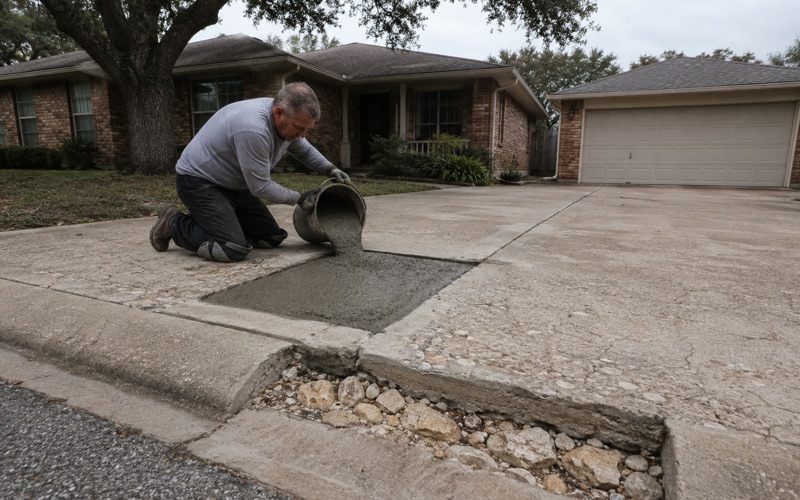
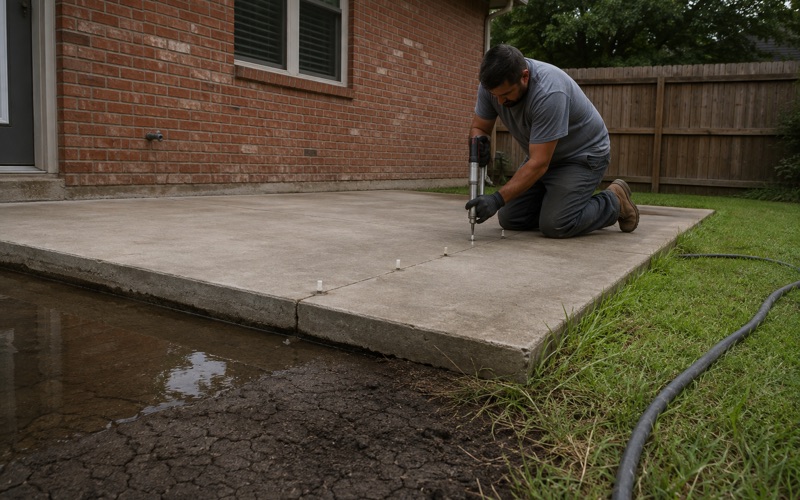
Where a landing has already dropped, we measure the offset against the thresholds that apply: a quarter inch vertical, a quarter to a half inch where it is beveled at one to two, and anything over a half inch ramped. Slab jacking is quoted separately from slab stabilization, since raising a settled slab and filling a void under one are different operations.
Claypan With the Clay Eight Centimeters Down
The Crockett Profile Puts Clay Under Your Boot
Crockett map units cover a fifth of Cedar Creek: the eroded fine sandy loam on 2 to 5 percent slopes at 14.84%, and the 1 to 3 percent unit at 6.75%. The representative profile runs an A horizon from 0 to 8 centimeters at 13 percent clay and 64 percent sand.
Directly beneath it sits a Btss horizon from 8 to 63 centimeters at 46 percent clay, liquid limit 62, plasticity index 38 and linear extensibility of 9.0 percent. Eight centimeters is about three inches, so this ground cannot be graded without meeting the clay, and the hydrologic soil group is C.
Edge and Wilson Set the Same Trap Two Other Ways
Edge gravelly fine sandy loam is the opposite presentation and it fools people. Its A horizon runs 0 to 28 or 30 centimeters at only 8.5 percent clay and roughly 70 percent sand, over a Bt1 carrying 47.5 percent clay and a plasticity index of 36. Edge map units cover 13.05% of the place.
Wilson clay loam, at 14.67%, is the wetter claypan: an Ap horizon 0 to 19 centimeters at 31 percent clay over a Btss at 42.5 percent clay and plasticity index 35. Tabor fine sandy loam adds 4.40% and returns a dual C/D group, the signature of a perched water table above the claypan.
Alfisol Ground, Not Blackland Prairie
Clipped to the census place polygon, the major components are 65.1% Alfisols, 14.2% Mollisols, 5.0% Vertisols, 1.7% Inceptisols and 1.1% Entisols, in survey area TX021. This is Post Oak Savannah claypan and floodplain, and an Alfisol claypan behaves differently from deep expansive prairie clay.
A Vertisol is a minority partner here, with Behring clay loam accounting for 2.94% of the place. On Houston Black clay at a plasticity index of forty four the whole column moves; here the surface is workable and the trouble is a slick layer a few inches down holding water against your base course.
Whitesboro Bottomland and Frequently Flooded Ground
The Largest Map Unit Here Is a Flood Soil
Whitesboro clay loam on 0 to 1 percent slopes, frequently flooded, is the largest single map unit at 14.96% of the place. Its profile is consistent rather than layered: one H1 horizon 0 to 66 centimeters at 30 percent clay, plasticity index 12 and linear extensibility 1.5 percent, over an H2 at 28.5 percent clay.
It falls in hydrologic soil group B, which is good news for shrink swell and bad news for scheduling. The frequently flooded phase in the map unit name is not decoration: it describes ground that takes water over it often enough for the survey to say so.
What the Flood Maps Show Inside the Place
Five categories of flood hazard occur inside the census place boundary: Zone A, Zone AE, the AE Floodway, the 0.2 percent annual chance shaded X, and areas of minimal flood hazard, on DFIRM panel set 48021C. Which one your lot sits in is a parcel question, and it sets the permit class.
Bastrop County’s flood damage prevention order, revised in July of 2025, adopts the flood insurance study and the flood insurance rate maps dated May 9, 2023. It also states that those maps may not identify every special flood hazard area, and that the floodplain administrator may expand them using the best available data.
Placing Concrete on Bottomland
On the frequently flooded units we plan the subgrade around moisture rather than around the calendar. Compaction to a proctor density means little if the material is above optimum moisture when the roller goes over it, and a base course built wet keeps the water it was built with.
Hot weather placement is planned around the load, because the discharge limit is keyed to the temperature of the concrete itself. Plastic shrinkage cracking is the failure that shows up on a hot, breezy afternoon on an open pad, so the pour, the finish and the curing compound run as one sequence.
The Bastrop County Development Permit, and What It Reaches
Grading, Paving and Excavation All Count as Development
Cedar Creek is an unincorporated census designated place with no city government of its own, and the whole polygon sits inside Bastrop County. That does not make flatwork here unregulated; it means the regulation arrives from a direction most owners do not expect.
The county’s flood damage prevention order defines development as any man-made change to real estate, including filling, grading, paving, excavation and the storage of equipment or materials. Article 3 Section C establishes the Bastrop County Development Permit for the unincorporated area, and grading, paving and excavation are most of what a concrete crew does on day one.
Development Services publishes three permit classes: Class A outside the mapped 100-year floodplain, Conditional Class A outside it but on a property partly within, and Class B partially or wholly inside. We read the order the conservative way and ask, since being told you did not need the permit costs nothing.
Driveways, Culverts and the County’s Own Standards
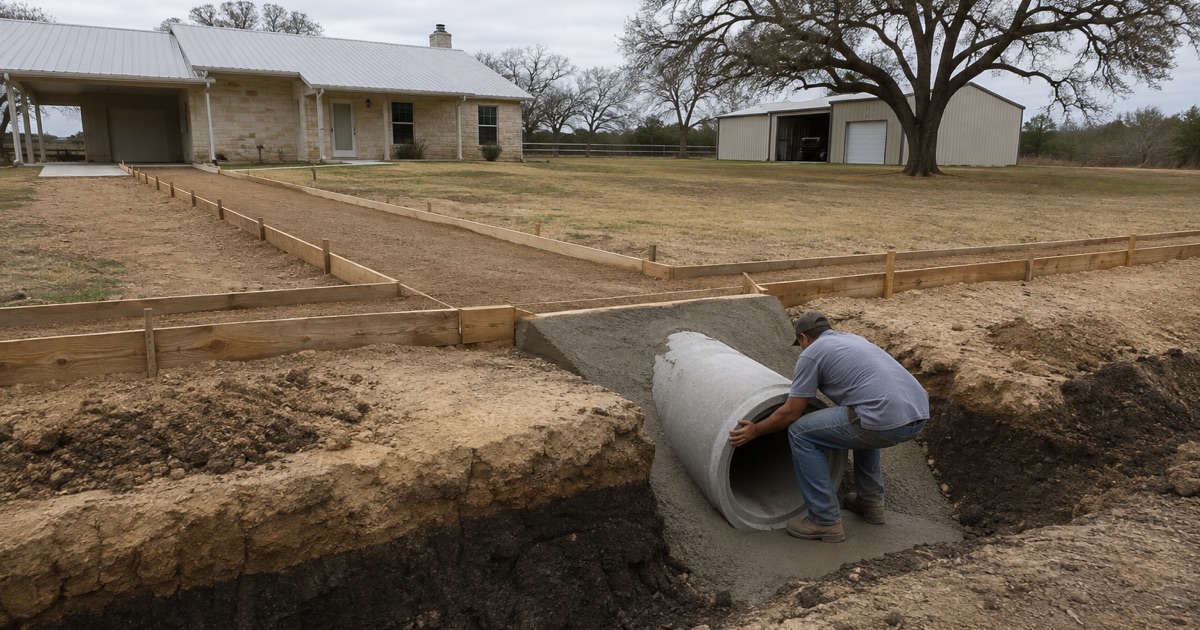
Development Services also issues Work in Right-of-Way permits and Temporary Driveway permits, and the county’s subdivision regulations require every driveway to be built and maintained in accordance with the Bastrop County Driveway Standards approved by the Commissioners Court. Driveways in exempted subdivisions are held to those same standards unless the County Engineer finds an alternative design would improve safety.
Those standards are specific. Throat width runs 12 feet minimum to 24 feet maximum, the turn radius is 5 to 15 feet on a curbed street and 10 to 15 feet on an uncurbed one, and no part of the driveway or culvert may encroach on adjacent property within the county’s right of way.
The surface must be all weather material to reduce tracking mud onto the county roadway, with concrete, asphalt, chip seal and flex base named as examples. Culverts are corrugated metal pipe or reinforced concrete pipe at 15 inches minimum diameter, and where the entrance meets a state-maintained road a TxDOT right-of-way permit is required as well.
Fees, Inspections and Who Signs Off
The fee schedule adopted on June 20 of 2025 prices this work directly. A driveway permit is $50, and a driveway constructed without one is $75. Single Family is $225, or $300 where floodplain is involved, and clearing or mass grading is its own $250 line.
Commercial work is where our trade shows up in the arithmetic: a $500 base plus $0.05 per square foot of building, plus $0.03 per square foot of impervious paving and parking and $0.015 per square foot of pervious, capped at $25,000. The paving is a fee input in its own right, at double the rate for impervious surface.
Residential construction follows a different route again. Under a Commissioners Court resolution of September 14, 2009 adopting HB 2833, a new single-family house or duplex must substantially conform either to the 2006 International Residential Code or to the version applicable in the county seat, and three inspections are required. The first is at the foundation stage before the placement of concrete, and the county is not involved in it.
The builder contracts privately with a licensed engineer, a registered architect or an ICC-certified residential combination inspector and keeps the reports. We treat that foundation stage as a hard date on the calendar, because there is no version of the job where it happens after the pour.
- 20+ Years in Business
- Insured
- Free Written Estimates